


 If your first instinct when sales slow down is to spend more on ads, we need to have a real conversation. In this economy, throwing money at marketing without fixing your internal sales systems is one of the fastest ways to burn cash and get frustrated doing it.
Costs are up across the board. Digital ads are more expensive. Competition is louder. Customers are more distracted and more selective about where they spend their money. That means the old strategy of “just spend more on ads to make more” is not only outdated but also dangerous.
The businesses that are winning right now are not necessarily the ones with the biggest budgets. They are the ones operating with the most discipline. They understand one simple truth that too many business owners overlook. You don’t need more leads. You need to do more with the leads you already have.
Let’s start with the biggest revenue leak in small businesses: follow-up. Most sales do not happen on the first interaction. They happen after multiple touchpoints. Sometimes it takes seven, even thirty, interactions before a customer is ready to buy. But most business owners give up after one or two attempts. They send a single email, maybe make one call, and when they don’t get an immediate response, they move on.
That’s not a strategy. That’s leaving money on the table. You need a follow-up system that works whether you feel like following up or not. Every lead that expresses interest should enter a structured process. That process should include a combination of emails, text messages, phone calls, reminders, and value-driven content that keeps your business top of mind. Because here’s what you have to understand. People don’t always say no. Sometimes they say not yet.
 They’re not uninterested; they are busy. They’re distracted. They’re evaluating options. They’re waiting for the right timing. And if you disappear after one attempt, you lose the opportunity to convert them later. The business that follows up consistently is the business that wins.
And this doesn’t have to be complicated. You can create a simple follow-up sequence that runs over 10 to 14 days. The first message might be a thank-you and a reminder about your offer. The second could share a client success story. The third might answer a common objection. The fourth could be a direct call to action. Each touchpoint builds familiarity, trust, and urgency.
Now let’s talk about email marketing, because this is where you can dramatically increase sales without spending another dollar on ads. You already have an email list. The question is whether you’re using it strategically or ignoring it until you need something. Too many business owners only send emails when they want to promote a product or service. That creates a transactional relationship, not a trusting one. And when every message feels like a sales pitch, people stop paying attention, and worse, unsubscribe.
Your email list should be one of your most valuable assets. It’s a direct line to your audience. It’s real estate you own. And it’s one of the most effective ways to nurture relationships over time.
 You should be communicating consistently, not just when you have something to sell. A weekly or monthly newsletter is a great start. Share insights that help your audience solve real problems. Tell stories that illustrate your expertise. Offer tips that they can implement immediately. Show them that you understand their challenges and have solutions that work. When you do this consistently, something powerful happens. You stop chasing customers, and they start coming to you.
And when you finally present an offer, it doesn’t feel like a surprise or a push. It feels like the natural next step in a relationship that has already been built. When you really do your marketing correctly, your customer asks you for a pitch. When they ask for your help, that’s when they are almost ready to close.
Now let’s shift to one of the most overlooked growth strategies in small business: referrals. Your best customers already trust you. They’ve experienced your product or service. They’ve seen the results. And chances are, they know other people who need exactly what you offer. But most business owners never ask for referrals. They assume that if customers are happy, they’ll naturally spread the word. And while that does happen occasionally, it’s not a reliable growth strategy.
You need to be intentional about it.
After delivering a great result, that is your moment. That is when the value is fresh, and the experience is top of mind. That is when you ask. You don’t need to overcomplicate it. A simple, direct question works. “Who else do you know that could benefit from this?” Or, “If you know someone dealing with this challenge, I’d be happy to help them too.”
You can also build a simple referral program that rewards customers for making introductions. It doesn’t have to be elaborate. A small incentive, a discount, or even a thoughtful thank-you can go a long way. The key is consistency. Referrals should not be an afterthought. They should be part of your process.
Now let’s zoom out and look at the bigger picture. Efficiency in business is about maximizing what you already have before you go out and try to get more. More leads without a follow-up system are wasted money. More traffic without a conversion strategy is wasted effort. More ads without a clear message are just noise.
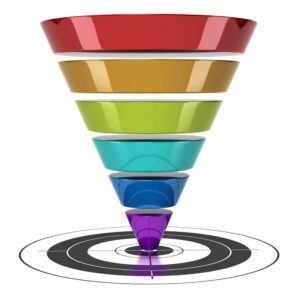 And this is where many businesses get stuck. They keep pouring money into top-of-funnel brand awareness strategies without fixing what’s happening in the middle and at the bottom. If your conversion rate is low, more leads won’t solve your problem. It will just make your inefficiencies more expensive. Instead, focus on improving your conversion process. Look at your offer. Strengthen your messaging so it clearly communicates the value of what you offer. Look at your follow-up systems so opportunities don’t slip away. Make it easier for customers to say yes by removing friction from your sales process.
When you break down your sales process, something powerful happens. Your existing leads become more valuable. Your marketing becomes more effective. And your revenue starts to grow without a corresponding increase in spending. This is how you build a sustainable business.
It’s not about chasing every new tactic or platform. It’s about mastering the fundamentals. Lead generation. Having a strong value proposition. Follow-up. Relationship building. Clear messaging. Consistent communication.
These are not new ideas. But they are the ones that work. And in a high-cost economy, discipline beats spending dollars every time. So, before you increase your ad budget, take a hard look at your sales systems.
- Do you have lead magnets?
- Are you demonstrating thought leadership?
- Do you have effective landing pages?
- Do you have sales funnels?
- Are you using a CRM?
- Is your offer effective?
- Do you have a strong value proposition?
- Do you have follow-up systems that convert?
- Are you handling objections?
- Do you have strong salespeople?
- Have you established KPIs?
- Are you using email marketing?
- Are you actively generating referrals?
If the answer is no, that’s where your opportunity is. We teach this and a whole lot more about closing in the Sales Accelerator Bootcamp; our Summer Cohort starts in June. Click here to book a call to discuss the program.
Business growth doesn’t always come from doing more; it comes from doing better. And right now, the businesses that win are the ones converting the most. If your sales results are not what you need them to be, we are happy to help you get them going in the right direction.


Leave a Reply